Become a Voice for the Ocean
I am writing to you today with a sense of deep urgency — and of deep hope. Because what MAY happen in the NEAR FUTURE to some of the most extraordinary places on Earth will depend, in part, on voices like yours.
On June 11, 2026, the Trump administration issued a proclamation rolling back protections across three of our most treasured Pacific Marine National Monuments — opening nearly 500,000 square miles of pristine, protected ocean to industrial commercial fishing. These are not just beautiful places. They are living, breathing sanctuaries that have taken thousands of years to become what they are.
I have dived in these waters. I have seen the creatures that call them home — endangered Monk seals and ancient turtles, schools of sharks and dolphins, seabirds found nowhere else on Earth. And I am telling you: we cannot let them go.
“When the ocean is protected, it thrives — and when it thrives, it sustains all life on Earth.”
Your voice matters now!
Three Pacific Marine National Monuments are under immediate threat.
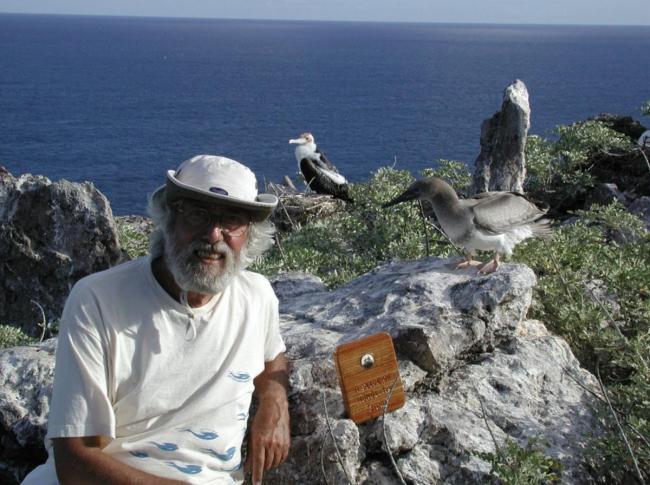
Papahānaumokuākea — Northwestern Hawaiian Islands
A UNESCO World Heritage Site of unparalleled biodiversity
582,578 square miles · 7,000+ marine species · 25% found nowhere else on Earth · Designated 2006
This vast ocean wilderness in the Northwestern Hawaiian Islands holds more than 7,000 marine species — a quarter of which exist nowhere else on our planet. Ancient black coral colonies live here for more than 4,500 years. Hawaiian monk seals, endangered and irreplaceable, rest on its shores. It is also a place of profound cultural meaning to Native Hawaiians, whose ancestors navigated these waters long before maps existed. Twenty years ago, a film we made about this place moved a president to protect it. Today, that protection is being stripped away.
The Mariana Trench — Guam
Earth’s deepest sanctuary — deeper than Everest is tall
95,216 square miles · 35,876 feet deep · Unique life found in total darkness · Designated 2009
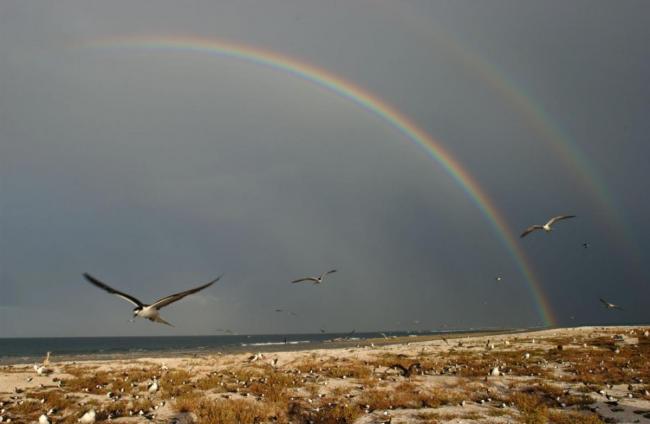
At the bottom of the world, where pressure would crush steel and no sunlight has ever reached, life found a way. The Mariana Trench plunges nearly seven miles beneath the Pacific surface — and it is alive. Snailfish, amphipods, and microbes have evolved over millions of years in conditions we are only beginning to understand. Opening these abyssal waters to industrial exploitation would risk destroying ecosystems science has barely glimpsed.
Rose Atoll — American Samoa
Nuʻu O Manuʻ — “Village of Seabirds”
Remote & uninhabited · 97%+ of regional seabird populations · Vibrant rose-colored coral · National Marine Sanctuary since 2014
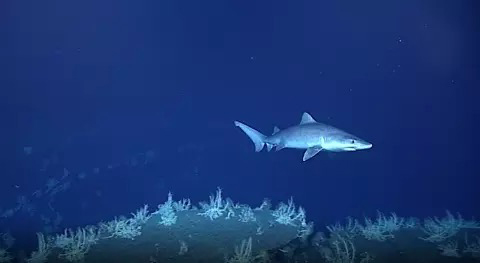
On a tiny, uninhabited atoll in the South Pacific, nature reigns supreme. Rose Atoll is a critical nesting ground for more than 97 percent of the seabird populations in the region — and its iconic rose-colored coral is found nowhere else. This is not just a wildlife refuge. It is a living symbol of what the ocean looks like when we leave it alone.
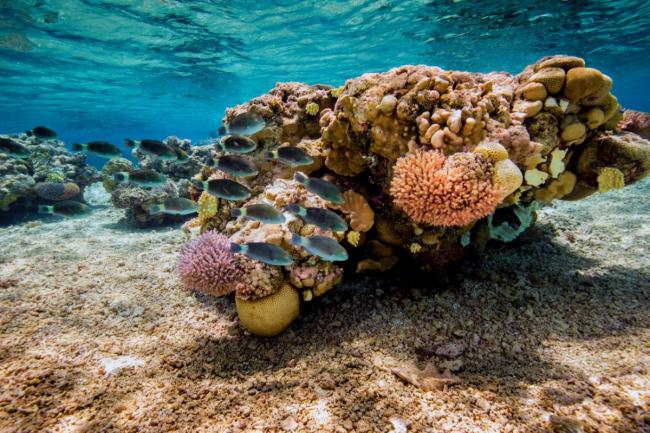
WHY MARINE PROTECTED AREAS ARE LIFE SUPPORT
Marine protected areas are not a luxury. They are among the most powerful tools we have to keep the ocean — and ourselves — alive. Fish grow larger inside them. They reproduce more successfully. Populations decimated by overfishing slowly rebuild. And the benefits don’t stay inside invisible boundaries: they spill over into adjacent waters, supporting local fishing communities, food security, and coastal economies.
These sanctuaries are also climate allies. Healthy ocean ecosystems absorb carbon, regulate temperature, and anchor the web of life that every person on Earth depends on — whether they live beside the sea or thousands of miles inland.
Rolling back these protections doesn’t help American fishers. It hands the ocean’s most sensitive places to industrial fleets for short-term profit — despite overwhelming opposition from scientists, local governments, and Indigenous Pacific communities.
These are sacred places where nature continues to function as it has for millennia. Opening them to industrial fishing sells out America’s natural heritage for the profit of a few.
VOYAGES THAT CHANGED HISTORY — AND CAN AGAIN
Seventy-five years ago, my father — Captain Jacques-Yves Cousteau — brought the ocean into living rooms around the world. He revealed its mysteries to millions of people who had never seen beneath a wave, and he sparked a movement.
Twenty-three years ago, our team at Ocean Futures Society set out on one of our most ambitious expeditions: 2,500 miles through the Northwestern Hawaiian Islands, diving, filming, and documenting one of the last truly pristine ocean ecosystems on Earth.
That expedition became Voyage to Kure — the first environmental film ever premiered at the White House. President George W. Bush watched it. And then he acted, designating Papahānaumokuākea as the largest marine protected area in the world at the time.
A Film That Changed Policy. Storytelling That Protected An Ocean.
Today, we are relaunching Voyage to Kure — because those ocean waters need protecting again, and because new audiences — new generations — need to fall in love with nature and protect what they love.
THERE IS HOPE — FROM ACROSS THE PACIFIC
While the United States rolls back ocean protections, the world is watching — and leading.
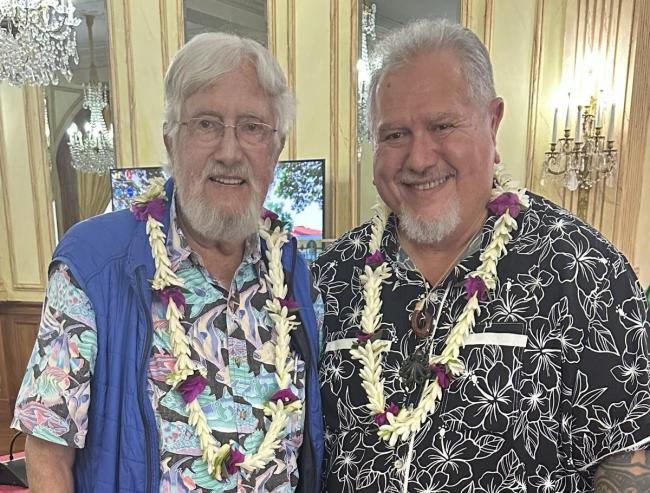
French Polynesia’s President Moetai Brotherson stood before the United Nations Ocean Conference in 2025 and declared his government would designate the nation’s entire 4.8-million-square-kilometer Exclusive Economic Zone as a Marine Protected Area — the largest such designation in the world. He banned industrialized fishing and deep-sea mining. He put his people’s way of life, rooted in a living ocean, above short-term extraction.
Their ocean: Among the healthiest ever studied — teeming with sharks, whales, dolphins, sea turtles, and coral reefs. Protecting it means safeguarding a civilization.
This is the example we must follow. Ocean Futures Society stands with President Brotherson and with all the nations, communities, and individuals who believe that lasting conservation is possible — when leadership is local, culturally grounded, and globally supported.
WHAT YOU CAN DO RIGHT NOW
Raise Your Voice: Share this message across your networks, social media, newsletters, and classrooms. Public pressure has protected the ocean before. It can again.
Support Ocean Education: Help us bring Voyage to Kure and Ocean Futures Society’s programs to Hawaiian schools, cultural organizations, and the Hawaiian Islands Humpback Whale National Marine Sanctuary — inspiring the next generation of ocean ambassadors.
Become a Partner: Whether you represent a foundation, corporation, university, Indigenous community, nonprofit, or government agency — we invite you to collaborate with us in advancing marine conservation, science, and cultural stewardship.
Make a Gift: Your tax-deductible contribution directly funds films, expeditions, educational programs, and the public outreach that turns awareness into action.
Every generation inherits the responsibility to leave the planet healthier than they found it.
My father believed that. I believe that. And I believe that you — reading these words right now — believe it too. The ocean is not a resource to be extracted. It is the living force that stabilizes our climate, connects every nation, community, and generation on Earth.
These three sanctuaries — Papahānaumokuākea, the Mariana Trench, and Rose Atoll — belong to all of us, and to all who come after us. Please stand with us to protect them.
With gratitude and urgency,

Jean-Michel Cousteau
President & CEO, Ocean Futures Society
"Protect The Ocean And You Protect Yourself” — Jean-Michel Cousteau

Connect With Us