An Urgent Statement To BAN the Risk of Oil & Gas Production
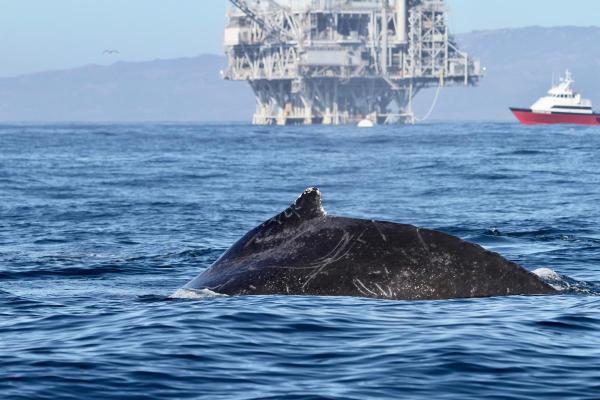
As President & CEO of Ocean Futures Society, I Jean-Michel Cousteau support the BAN on all oil and gas drilling and production in the Santa Barbara County including and along the coast and in the Channel Islands. The Santa Barbara community is in opposition to a return to these practices already proven environmentally and economically costly.
The science is unequivocal. Expanding fossil fuel infrastructure moves us further from climate stability. The Intergovernmental Panel on Climate Change has made clear that continued fossil fuel dependence threatens our ability to meet the global climate goals that will protect life-sustaining systems.
Restarting pipelines and oil and gas production does not lower energy risk—it transfers it. Coastal communities, marine ecosystems, and future generations bear the potential costs. A single failure contaminates beaches, destroys habitats, and devastates local economies built on tourism and fisheries. The long-term damages far outweigh any short-term gains in production.
Energy security matters—but true security is measured not in barrels of oil, but in the resilience of our ecosystems, the health of our communities, and the stability of the ocean the vital living forces stabilizing the global climate of our planet.
At a moment when science, markets, and public consensus are converging on the urgent need for clean energy transition, the federal government is moving decisively in the opposite direction. The current administration’s push to expand oil and gas development across California, the Gulf of California, the Arctic, and the rapidly growing U.S. LNG sector is not merely a policy shift it is a profound step backward, deepening climate risk when global stability depends on reducing it.
We have seen the catastrophic consequences before. We know what they cause.
The Santa Barbara coast, celebrated for its beauty and mild climate, is more than a scenic stretch of shoreline—it is the birthplace of the modern environmental movement, awakened by the 1969 oil spill. Currently allowing oil to flow through pipeline systems already compromised by aging infrastructure and decommissioned after the 2015 Refugio spill—ignores history. That spill released over 100,000 gallons of crude, coated miles of shoreline, destroyed 1,500 acres of intertidal habitat and 2,200 acres of sub-tidal fish habitat, killed hundreds of birds and marine mammals, closed 138 miles of fisheries, and caused an estimated $3.9 million in lost recreational and economic value.
These events are not distant memories—They Are Warnings.
The County of Santa Barbara and throughout California communities oppose the reopening of aging pipelines, oppose the reactivation of long-decommissioned offshore rigs, and oppose proposals to extend the life of outdated energy infrastructure which signals a return to practices already proven environmentally and economically costly. These actions undermine years of progress toward renewable energy solutions that are viable and essential.
These developments do not exist in isolation. They are being amplified by the actions and policies in the federal government whose leadership decisions contribute to escalating conflict and global instability. In this environment, geopolitical tensions increase human and economic uncertainty while diverting critical attention and resources away from the climate crisis, where coordinated local global action is urgently needed.
The federal government justifies restarting the Santa Barbara offshore pipeline under emergency authority for national security, energy stability, and military readiness. These are serious concerns—but invoking emergency powers to revive aging offshore oil infrastructure in an ecologically sensitive region with a painful history is not a solution—it is a risk.
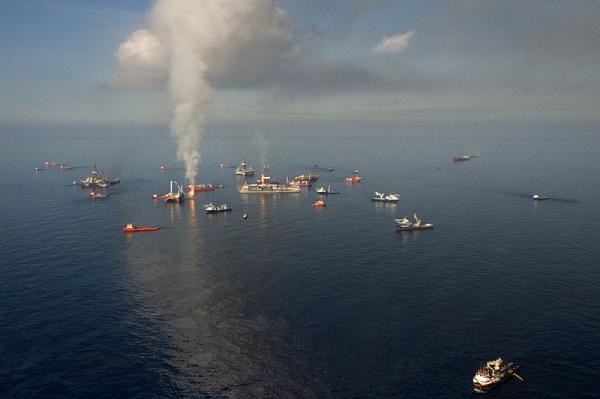
We have experienced firsthand the catastrophic consequences of major oil spills across decades and continents. From the 1969 Santa Barbara oil spill, one of the earliest environmental wake-up calls in the United States, to the Alaska Exxon Valdez oil spill, which devastated pristine wilderness and marine life; from Spains Prestige oil spill to the The Gulf of Mexico’s Deepwater Horizon oil blowout disaster—the largest marine oil spill in history.
These are not isolated tragedies. They are warnings—part of a global pattern of environmental harm whose impacts ripple across generations. Marine ecosystems suffer long-term damage, coastal economies are disrupted, wildlife populations are decimated, and human health and livelihoods are placed at risk. Yet despite decades of devastation and hard-learned lessons, investment in true prevention and effective large-scale response remains far below what is required. Fines and penalties have proven insufficient to drive systemic change. The cost of doing business continues to fall short of the true cost to life on Earth.
The misconception and decisions often justified in the name of energy security measured in barrels of oil is not security. True security is measured in the resilience of our planets living ecosystems, the stability of our climate, and the health of the ocean—our planet’s life support system. Energy security solutions are already within reach yet have been ignored or cancelled by short term governance and industry.
This is not simply environmental policy—it is national and economic security.
In a world where geopolitical disruption is no longer the exception but the norm, resilience must be built into the structure of our energy systems. Diversifying renewable energy—solar, wind, geothermal, and hydro—these systems are sustainable and more secure: locally sourced, resilient, abundant, adaptable, and beyond geopolitical control. A diversified renewable system functions on its own reserve. When one source fluctuates, others compensate. Combined with energy storage and modern grid system technologies they create flexible self-balancing networks capable of withstanding both environmental and geopolitical shocks. Unlike fossil fuel systems dependent on fragile global supply chains, this approach replaces finite reserves with adaptive capacity.
Long rooted local communities and Indigenous peoples have lived in relationship within the same environments for generations—guided by principles of reciprocity, responsibility, and respect. They understand that we do not inherit the Earth from our ancestors—we hold it in trust for those yet to come.
The solutions are already within reach. What is missing is not innovation—it is the will to act guided by science and environmental acknowledged technologies.
We must continue to demand stronger protections, enforce meaningful accountability, and require full investment in prevention, response, and restoration. We must demand to reaccelerate the transition to truly diversified sustainable renewable energy systems not discontinue them and do not sacrifice the planets vital large ecosystems or communities for short-term gain. We must partner and listen with Indigenous knowledge holders and local community stewards, whose lived experiences offers a path forward grounded in balance and resilience.
We must choose the path—that reflects the urgency of our energy needs and our enduring responsibility to protect ALL of our planet’s wild natural ecosystems and The OCEAN.
Together, these choices will shape the future of our only home—our Blue Planet Earth & Ocean, comprised of more than 70% OCEAN. The OCEAN is not separate from us. It is the living system that sustains all life.
The Path is clear: Protect the Ocean—and You Protect Yourself.
Ocean of Thanks with respect and urgency,

Jean-Michel Cousteau
President & CEO, Ocean Futures Society
"Protect The Ocean And You Protect Yourself” — Jean-Michel Cousteau

Connect With Us